
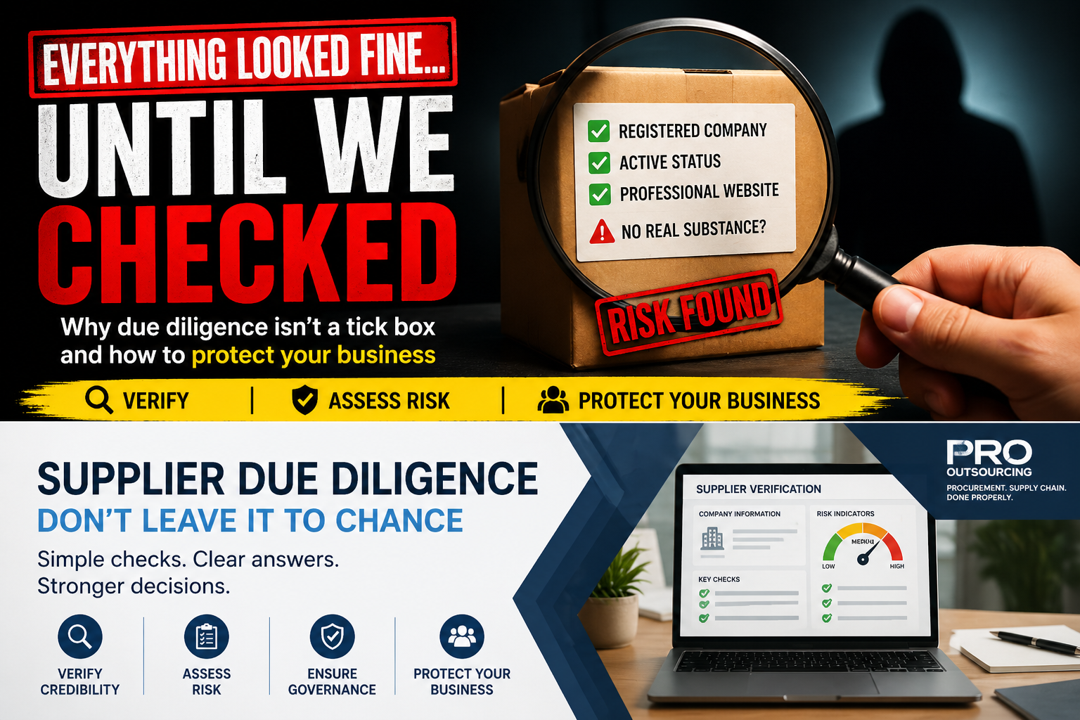
Everything Looked Fine… Until It Didn’t
I recently carried out a desktop due diligence review ahead of a supplier onboarding decision.
On the surface, everything stacked up.
- UK registered company.
- Active status.
- No sanctions or adverse media.
- A professional-looking website positioning the business as an established industrial supplier.
At a glance, most would move forward.
But a closer look told a different story.
Where Things Started to Unravel
Nothing dramatic. No red flags jumping off the page.
Just small inconsistencies.
- An address that did not quite align.
- A “trading location” that turned out to be a virtual office.
- A business positioning itself as a long-established wholesaler… with a relatively recent incorporation date.
- And a financial position that did not support the scale being presented.
Individually, none of these are unusual.
Together, they raise a very different question.
What are you actually contracting with?
The Bit That Often Gets Missed
This is where due diligence moves beyond a tick box.
The entity in question was real. Registered. Compliant. No obvious legal concerns.
But when you look at substance, the picture changes.
- Minimal net assets.
- No employees.
- No operational footprint.
That matters.
Because if something goes wrong, non-delivery, dispute, quality issues, you are not contracting with a brand or a website.
You are contracting with a balance sheet.
And in this case, there was very little behind it.
This Isn’t About Fraud, It’s About Governance
Most of the time, situations like this are not malicious.
They are structural.
Broker models. Intermediaries. Businesses presenting capability that sits elsewhere in the chain.
The risk is not always that something will go wrong.
It is that if it does, you have no meaningful route to recover.
That is a governance issue, not a compliance one.
A Simple Check Changes the Decision
What was useful here was not uncovering something dramatic. It was bringing clarity.
Understanding:
- what the entity actually was
- what sat behind it commercially
- and what the real exposure looked like
That changes how you engage.
Whether that is:
- sourcing direct
- structuring payment differently
- or simply choosing an alternative route
Don’t Leave It to Chance
Due diligence does not need to be over-engineered.
But it does need to be consistent.
Because once you place an order, especially with upfront payment or tight timelines, your options reduce quickly.
A short, structured desktop review can give you a very clear view of risk before you commit.
Where Pro Outsourcing Supports
At Pro Outsourcing, we support quick, practical supplier due diligence that goes beyond surface-level checks.
Not to slow things down.
But to make sure you know exactly who you are dealing with.
If something does not stack up, you know early.
If it does, you move forward with confidence.
You can find more about our approach here:
👉 https://www.pro-outsourcing.co.uk/supplier-audits/
Get in touch today!
See our other blogs
recommended further reading: